Planning your website
Why two websites with the same number of pages can have very different prices
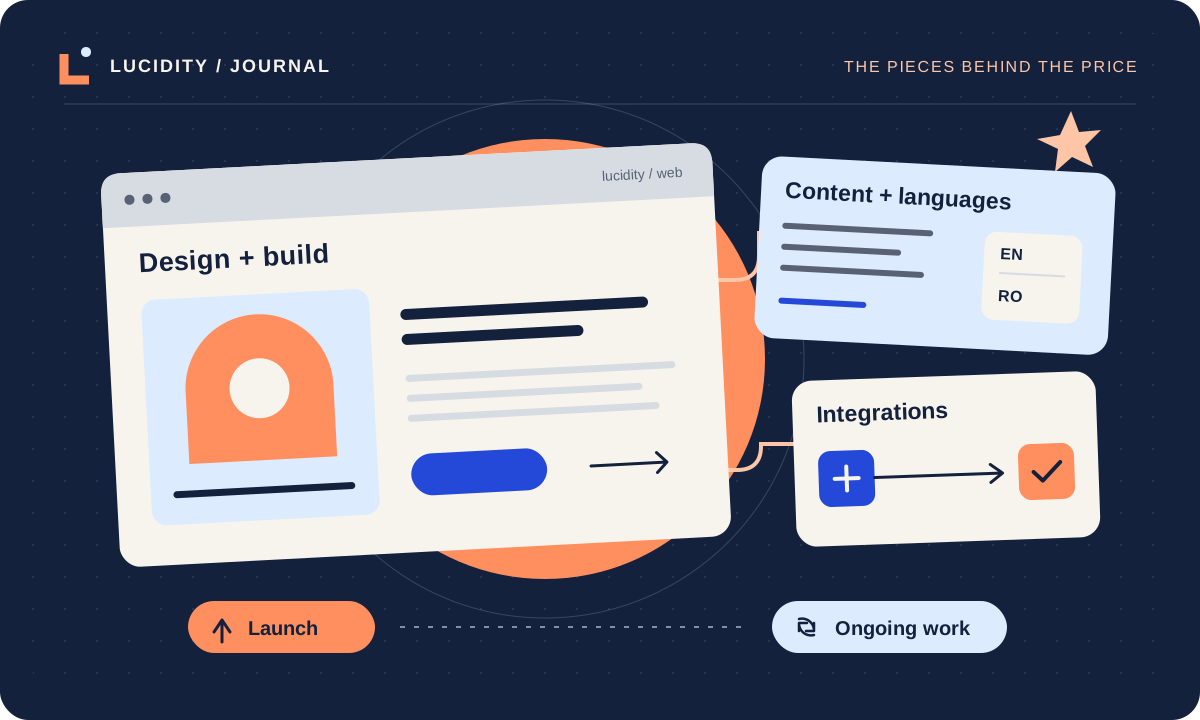
You ask two studios for a five-page business website. Both proposals mention a homepage, services, about, gallery and contact. The totals are different. How do you tell whether one is overpriced, the other leaves work out, or they are simply proposing different projects?
Start with what each offer includes. Page count describes the amount of information you want to present; it says much less about how that information is designed, prepared, edited or connected to other tools.
The same page list can hide a different project
Consider two hypothetical five-page salon websites.
In the first, the business supplies finished text and photographs. The studio adapts an agreed visual direction, presents the services, and adds contact links to request an appointment.
In the second, service descriptions need rewriting, content needs two language versions, the owner wants to update the gallery, and the site must connect to an existing booking tool. The page list is identical, but the responsibilities and behaviour are different.
Neither version is automatically better. The useful question is which scope fits the business now—and whether the proposal explains the work clearly.
Look at six decisions behind the total
| Decision | What to clarify in the proposal |
|---|---|
| Design | Are you adapting an existing design or creating a new visual direction? Which layouts and review rounds are included? |
| Content | Who writes, selects and uploads the text and images? Is moving existing content included? |
| Functionality | Does the site link to an external tool, embed it, or exchange data with it? What must happen when something fails? |
| Languages | Who prepares translations? Which content and interface labels need translation, and who checks them? |
| Editing | What can your team change after launch? Is an editing system, training or documentation included? |
| Launch and handoff | What is checked before launch? Who handles the domain, hosting, source files and access afterwards? |
A “booking feature”, for example, might mean a button to an existing service. It might mean an embedded calendar. It might mean a custom system with availability, payments and notifications. Ask the studio to describe the visitor’s action and the result, rather than relying on the feature name.
Separate launch work from ongoing costs
A proposal should let you distinguish the project fee from recurring services. Ask about the domain, hosting, any paid tools and optional maintenance. Clarify which accounts you own, which services you pay directly, and what happens if you stop working with the studio.
Also distinguish fixing an agreed feature from adding a new one. An enquiry link that opens the wrong destination and a later request for online payments are different kinds of work. Ask how corrections, future changes and support will be handled, without assuming they are included indefinitely.
This gives you a useful comparison even before you compare totals.
Reduce scope deliberately
If an offer exceeds your budget, ask which decisions can be simplified while preserving the main customer journey. Could the first release use your existing booking service? Could you launch with a smaller set of finished content and add another section later? Would you actually use a content editor every week, or is occasional assistance enough?
Simplifying functionality is different from removing basic usability checks. Agree how the site will be checked on mobile, with a keyboard, and with readable text and meaningful links. W3C’s accessibility planning guidance recommends considering accessibility early and checking throughout a project, reducing the risk of design decisions that are expensive to change later.
The studio should explain the effect of a smaller scope on both the launch and future changes. “We can add it later” needs a sensible technical path, not just an optimistic sentence.
Compare proposals on the same basis
Before deciding, ask each studio to confirm:
- The page layouts and exact visitor actions included at launch.
- The content, translations and feedback you need to supply.
- What is excluded, and how additional work will be agreed.
- The checks, handoff and access included in the project.
- Recurring services and the terms of any ongoing support.
If an answer is missing, treat it as a question to resolve—not as a free inclusion or proof of poor work. You may find that a lower price suits a simpler brief, or that a higher proposal covers work you would otherwise need to organise separately.
There is no universal fair price for “five pages”. A useful offer makes the proposed result and responsibilities clear enough for you to choose.
If you are still defining the project, start with our website brief template. Or tell Lucidity Soft what you need: we can discuss the scope before proposing design and development for your business website.
Prepared with AI assistance by Lucidity Soft.
← All articles